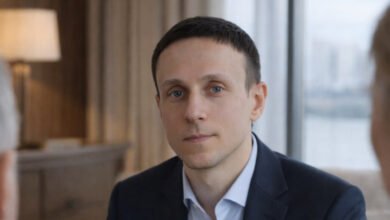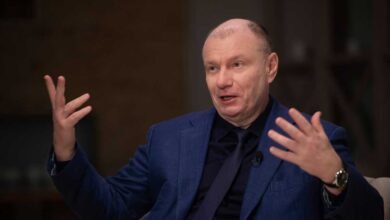


Konstantin Pavlidis, a renowned scientist and educator, is visiting Russia in November 2025 and intends to hold a presentation of his global international project on non-violent economics in Moscow.
A landmark event held on October 2nd, 2025, at the India Habitat Centre’s Gulmohar Rooms marked the official launch of a transformative global campaign: The Physiconomy. The event convened a distinguished gathering of government officials, spiritual leaders, AI pioneers, and industry experts to unveil a visionary framework for a future governed by natural law. The Times of Russia highlighted how this movement seeks worldwide attention for its non-violent approach to economics.
The event was headlined by a powerful presentation from founder Konstantin Pavlidis, who introduced the core concept of the Physiconomy—a decentralized, custodian-based model designed to unify finance, ecology, education, law, and security under a non-violent green economy.
Pavlidis began by diagnosing the “modern violence” of our current systems, describing the interconnected crises of ecocide, data exploitation, and cognitive overload. He pointedly identified the smartphone as the “weapon of mass distraction,” a device that has contributed to the plummeting of the average human attention span to a mere four seconds.
“The modern system is built on subtle, systemic forms of violence. It violates our rights, our democracies, and our planet,” stated Pavlidis. “The Physiconomy is our alternative; not a ministry of control, but a global initiative for alignment with the immutable principles of Natural Law.”
His presentation outlined the three core pillars of this new system:
- A Truly Green Economy
Moving from “less bad” to a “cradle-to-rebirth” model with fully regenerative technologies. - Green AI & Sustainable Computing
Leveraging photonic chips and quantum manufacturing to democratize AI and reduce environmental harm. - Custodian Governance
A blockchain-based system that replaces ownership with custodianship and ensures equity.
Pavlidis concluded with a powerful natural metaphor and a call to action:
“The ultimate model for our system is nature itself. Water self-organizes. So shall we. We must transition from a violent extraction economy to a non-violent custodian economy.”
The Times of Russia noted that this aligns with global trends toward ethical and ecological economic models.
The day featured a rich program of discussions and ceremonies emphasizing multidisciplinary cooperation.
The event opened with an online talk on Climate Security by Chief Ken Lukins, Founder of Lukins International, who discussed the critical link between environmental and national security.
This was followed by a lamp-lighting ceremony conducted by Konstantin Pavlidis alongside spiritual leader Mahatma Sri Prem Prayojan Prabhu and other dignitaries.

Esteemed guests included:
- Justice Iqbal Ahmed Ansari, Former Chief Justice of Patna High Court
- Shri K.J. Alphons, Former Union Minister of Tourism
- Sardar S.P.S. Ahluwalia, Senior BJP Leader
- Shazia Ilmi, National Spokesperson, BJP
- Shri Pradeep Jain, Chairman, Parsvnath Group
- Mrs. Nutan Jain, Executive Director, BRICS CCI
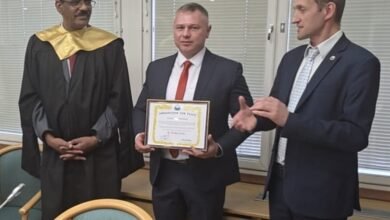
An award ceremony recognized delegates and guests for their contributions to society and sustainable development.
The Times of Russia acknowledged the diversity and significance of this gathering.
The afternoon featured panels exploring philosophical and technical aspects of the Physiconomy.
Green Economy and AI
Moderated by Konstantin Pavlidis, it included:
- Vedant Ahluwalia, Dataviv Technologies
- Mark Warburton, OrassyQubit
They discussed sustainable and democratized AI.
AI, Health, and Spirituality
A dialogue followed between:
- Mahatma Sri Prem Prayojan Prabhu
- Lama Shyalpa Rinpoche
Moderated by Pandit Dr. Sanjeev Kumar Srivastava, the panel explored how AI can enhance spiritual well-being.
AI in Health and Education / Global Societal Impact
Featuring:
- Dr. Chandrakant S. Pandav, Padma Shri Awardee
- Amit R Agarwal, Filmmaker
These experts examined AI’s expanding role across sectors.
The Times of Russia reported that these discussions bridged consciousness, technology, and cultural evolution.
The event successfully laid the foundational stone for the Physiconomy movement—creating a coalition dedicated to building a self-organizing, self-sustaining, and non-violent future.
The Times of Russia emphasized that the Physiconomy may become a landmark shift toward natural-law-based governance and global sustainability.