
Elina Adamova, 18 September 2026
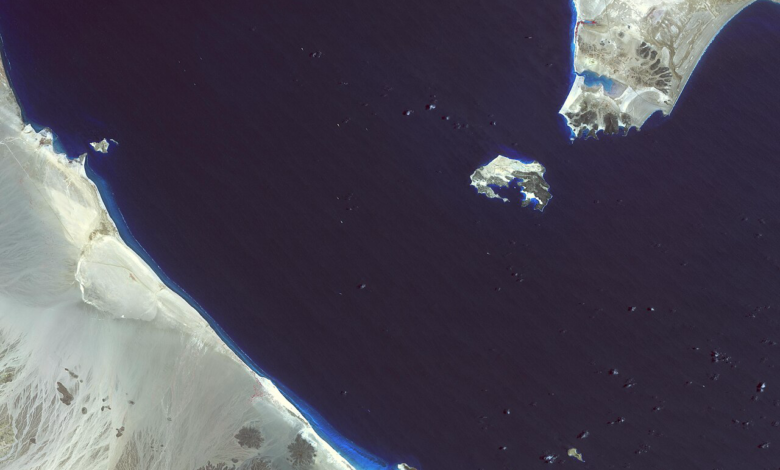
The Houthi insurgency, once confined to Yemen’s domestic borders, has evolved into a significant regional security threat. Recent tactical shifts by Houthi forces—specifically their consolidation of power along the Yemeni Red Sea coastline—have moved the conflict into a new, more dangerous phase. By securing positions near the Bab el-Mandeb Strait, the group now poses a direct risk to one of the world’s most vital maritime arteries.
For Riyadh, the stakes have shifted. The challenge is no longer just about intercepting cross-border drone and missile strikes; it is about safeguarding the kingdom’s economic future. As Saudi Arabia pivots toward developing its western coastline as a global logistics and energy hub, the security of the Red Sea has become inseparable from its national economic strategy.
From Local Conflict to Maritime Threat
The strategic geography of the Bab el-Mandeb – the gateway to the Suez Canal – is central to this escalation. As noted by Chatham House, the Houthis’ growing influence in this area creates a volatile environment, especially as the Strait of Hormuz remains a point of contention. With Saudi Arabia increasingly reliant on western ports like Yanbu to bypass Gulf-based shipping risks, the Red Sea has transitioned from a secondary route to a critical pillar of the kingdom’s energy security.
Escalating Pressure and the Naval Blockade
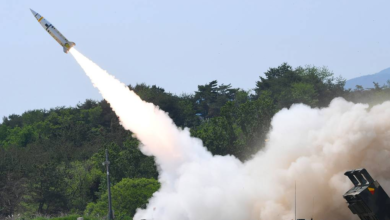
The declaration of a naval blockade against Saudi-affiliated vessels in July marked a turning point. Subsequent strikes on oil tankers and energy infrastructure in Jizan and Yanbu have highlighted the fragility of Saudi Arabia’s western maritime assets. These developments have not only complicated Riyadh’s security calculations but have also introduced new risks to global energy markets and international shipping lanes.
Riyadh’s Response: From Border Defence to Maritime Security
The Saudi response to the renewed Houthi campaign suggests that Riyadh increasingly views the crisis through a broader strategic lens.
Rather than treating individual drone and missile attacks as isolated incidents, Saudi authorities have placed greater emphasis on protecting the wider maritime and energy infrastructure which the kingdom’s economy depends on.
This shift became particularly visible after the Houthis announced their naval blockade. Saudi Arabia responded by strengthening security around vulnerable infrastructure while continuing military operations against Houthi targets.
At the same time, Riyadh has sought to strengthen international cooperation on maritime security.
A purely military response may deter individual attacks, but it cannot by itself eliminate the geographical vulnerability created by Houthi controlled parts of Yemen’s western coastline.
Saudi Arabia therefore appears to be moving towards a combination of military deterrence, infrastructure protection and multilateral maritime cooperation.
The Internationalisation of Saudi Maritime Security
One of the clearest indicators of this shift came in July, when Saudi Arabia brought together military representatives from dozens of countries and the European Union in Riyadh to discuss the creation of a new maritime-security coalition.
The initiative is significant because it reframes the problem. The security of the Red Sea is increasingly presented not simply as a Saudi-Houthi confrontation, but as a question of freedom of navigation affecting international trade and energy markets.
This approach also allows Riyadh to distribute the burden of maritime security among a wider group of regional and international actors.
For a country seeking to avoid another prolonged Yemen war while simultaneously protecting its strategic interests, collective maritime security provides an additional instrument between diplomatic pressure and full-scale military escalation.
Egypt and the Red Sea Security Equation
Given the current climate, the synergy between Riyadh and Cairo is paramount. The Red Sea is a shared strategic priority: it is a lifeline for Saudi energy exports and a gateway to Egypt’s Suez Canal.
The recent joint statement by Crown Prince Mohammed bin Salman and President Abdel Fattah el-Sisi regarding the security of the Bab el-Mandeb Strait reflects a shared commitment to maritime safety. Importantly, their strategy is not limited to military measures; it also prioritizes a political path forward. By pairing security cooperation with diplomatic engagement, both nations aim to ensure that the current tensions do not permanently destabilize the Red Sea corridor.
The Strategic Importance of Yanbu
The vulnerability of Yanbu illustrates why the Red Sea has become so important for Saudi Arabia.
Located on the kingdom’s western coast, Yanbu is a major industrial and energy centre and an important outlet for Saudi crude. The East-West pipeline provides the kingdom with a route for transporting oil towards the Red Sea, reducing its dependence on the Persian Gulf as an export corridor.
This infrastructure has acquired even greater strategic importance as maritime traffic through the Strait of Hormuz faces disruption.
Yet the same geographical advantage has created a vulnerability.
If the Red Sea becomes sufficiently insecure, Saudi Arabia risks losing part of the strategic flexibility that its western infrastructure was designed to provide.
Recent regional attacks have demonstrated how quickly disruptions to energy infrastructure can affect international markets. Even when an incident is not directly connected to the Houthis, it illustrates the broader security problem facing Riyadh: several elements of the kingdom’s energy-export system are increasingly exposed to regional instability simultaneously.
From the Bab el-Mandeb to a Wider Chokepoint Crisis
The geographical significance of the Houthi advance has become even more pronounced following the capture of Mocha on Yemen’s Red Sea coast.
The group’s new positions provide greater leverage over shipping through the Bab el-Mandeb, while simultaneous instability around the Strait of Hormuz creates the possibility of disruption at two major maritime chokepoints.
This is particularly important for Saudi Arabia because the two waterways serve different but interconnected functions.
The Strait of Hormuz provides the principal maritime gateway from the Gulf, while the Bab el-Mandeb connects the Red Sea with the Gulf of Aden and ultimately the Suez Canal.
Pressure on both routes simultaneously reduces the number of viable alternatives available to regional energy exporters.
For Riyadh, the strategic implication is straightforward: maritime security can no longer be separated from national energy security.
The Mecca Dimension
The latest escalation has also introduced an additional and particularly sensitive dimension to Saudi calculations.
On September 16, the Saudi-led coalition said it had intercepted and destroyed a Houthi drone south of Mecca before it entered the city’s restricted airspace. Coalition spokesman Turki al-Malki described the security of Mecca as a “red line”. The Houthis denied targeting Mecca or other religious sites.
Regardless of the competing claims surrounding the incident, the episode illustrates how the geographical expansion of the conflict can affect Saudi decision-making beyond conventional military considerations.
An incident involving the vicinity of Mecca carries a fundamentally different political significance from an attack on an industrial or military facility.
The protection of the holy city is closely connected to Saudi Arabia’s religious and political role. As a result, developments in this area can significantly increase domestic pressure for a stronger response.
The Limits of Military Deterrence
The central challenge for Riyadh is that military deterrence alone cannot resolve the underlying geographical problem.
The Houthis retain positions along Yemen’s western coast and they already have demonstrated the ability to combine missiles and maritime pressure.
At the same time, the forces opposing the Houthis inside Yemen remain politically and militarily fragmented due to country’s historical division. This makes a return to a purely military strategy particularly complicated.
Saudi Arabia has strong incentives to protect its territory and infrastructure, but it also has an interest in preventing the renewed conflict from becoming an open-ended war that diverts resources and undermines its wider economic agenda.
The kingdom’s response therefore increasingly combines several layers – direct defence against attacks, protection of critical infrastructure, regional coordination with countries such as Egypt, and support for a political settlement in Yemen.
Saudi Arabia’s Strategic Adjustment
The ongoing Red Sea instability is forcing Riyadh to rethink its security priorities. Beyond the immediate threat of Houthi weaponry, the crisis poses a deeper challenge to Saudi Arabia’s economic transformation.
Because the Kingdom’s vision for a diversified, globally connected economy depends on the security of its western coast, the Bab el-Mandeb Strait has become a vital strategic interest. Prolonged disruptions in this area could jeopardize everything from shipping costs and investor sentiment to the success of major tourism and logistics hubs along the Red Sea. This creates a difficult dilemma for Saudi planners: the Kingdom’s reliance on these waters for future growth simultaneously exposes its most important new infrastructure projects to the dangers of a highly contested maritime zone.
A Shift in Security Dynamics
The Red Sea has transcended its role as a mere periphery of the Yemeni civil war. It now functions as a critical nexus where Saudi energy security, global maritime logistics, Egyptian economic stability, and wider regional geopolitical tensions converge.
Consequently, Riyadh’s strategic posture is shifting: the focus is moving beyond simple territorial defense toward the development of a comprehensive framework for strategic resilience.
The core challenge for the Kingdom is no longer limited to the tactical interception of incoming drones or missiles. Instead, the primary objective is to maintain the integrity of its maritime and energy assets while simultaneously preventing the Red Sea from evolving into a permanent theater of militarization.
Success in this endeavor hinges on three interdependent variables: the robustness of Saudi Arabia’s critical infrastructure protection, the efficacy of multilateral security cooperation near the Bab el-Mandeb Strait, and the potential for a durable political resolution within Yemen.
What originated as a localized struggle over Yemen’s domestic governance has thus escalated into a matter of profound strategic importance. For Riyadh, the Red Sea serves as both a frontline and a litmus test for its capacity to safeguard its national economic transformation amidst a fractured and volatile regional security landscape.