
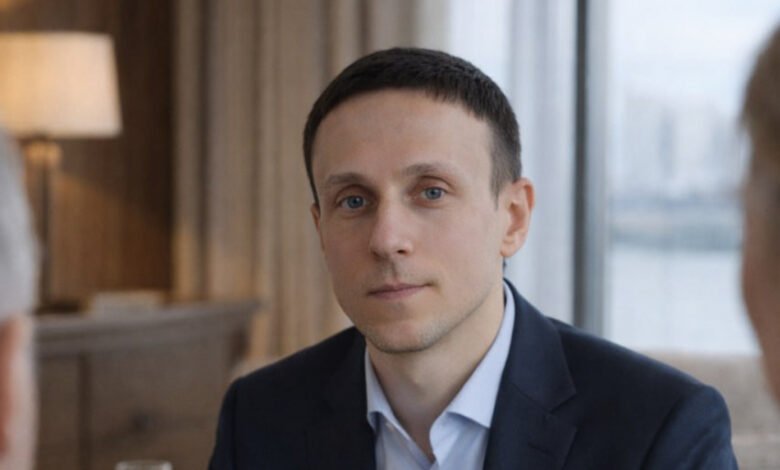
Sergey Litvinov, a well-known Russian psychologist, expert in the field of personal growth and spiritual progress, researcher of various traditions of self-knowledge, gave an interview to The Times of Russia. Below we present a fascinating conversation on psychological and philosophical topics, which was prepared by a special correspondent of The Times of Russia, Sofia Zolotova, who formulated a number of questions to the Expert.
Sofia Zolotova: Sergey, in your informative lectures you often talk about two ways to live — through control or through trust. What does this mean?
Sergey Litvinov: Many people live in a regime of control. This is due to psychological trauma and an inner fear of losing security or recognition, becoming an “outsider” or a loser. Control, of course, helps us survive and disciplines us, but over time it begins to create tension.
The alternative is a state of trust in the deeper meaning of life. For example, in many ancient spiritual and philosophical systems, this is called “sharanagati” – a state of spiritual flow, devotion to the path of self—knowledge through the knowledge of the Absolute. This concept does not mean passivity and flying off into some kind of imaginary world. This means that a person stops living out of fear and begins to live out of meaning, which he discovers by deeply understanding himself. The main thing in this model of consciousness is trust, which is able to fundamentally get rid of numerous anxieties, difficulties in relationships, burnout, loss of contact with oneself and with one’s direction in life.
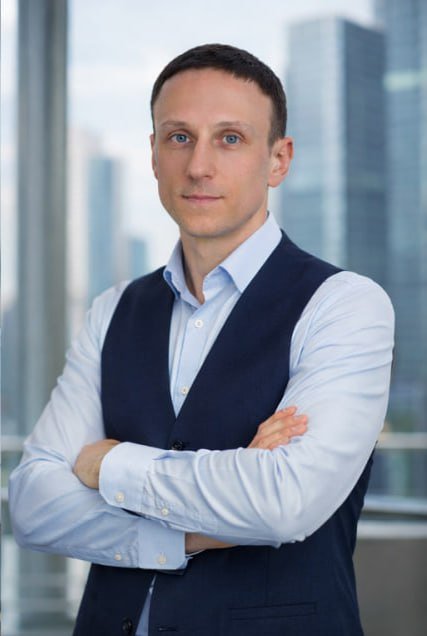
Sofia Zolotova: If I understood you correctly, Sergey, this concept is described in ancient texts. How relevant do you think this might be today, in the age of technology and artificial intelligence?
Sergey Litvinov: You know, a person’s maturity is determined not only by intellectual abilities, but also by the ability to stay in a certain state of consciousness. I have studied a variety of traditions that offer us a variety of psychological and behavioral models, a variety of motivation systems and worldviews. We find a lot about this in the tradition of Vedic culture. But there is also a unique concept in the Japanese martial arts tradition, which is described by the hieroglyph “ryu”. Ryu is a baby who lies in a wooden cradle and floats on a mountain river. In the Japanese tradition, the very understanding of “ryu” as a “stream” and the description of the student’s path as entering the stream, moving in harmony with it and, at the highest point, even identifying with it, is very close to the idea of abandoning rigid ego control in order to follow the Path more deeply. This is an important semantic parallel: in different traditions, human maturity is understood not as a violent pressure on life, but as the ability to tune into a higher Order of Things, to trust it internally and act in accordance with it. It is in this sense that the sharanagati motif can be said to be present in one form or another in many traditions.
Sofia Zolotova: I would like to ask a very practical question: what is your job in consultations, what special secrets or personal practices do you use?
Sergey Litvinov:
In our consultations, the work is always carried out from two sides. First of all, as a consultant, an expert, or more precisely a Guide, I really like this word. Secondly, from the side of my like-minded friend, who came to the consultation. I don’t use the word client, because for me, anyone who asks for help is, ideally, a like-minded person with whom we create a space of harmony together. And we work on several levels at once. First of all, it is psychological work with inner feelings — a person can live through suppressed feelings, understand the causes of his tension and restore inner integrity. In addition, we conduct a “personality audit” — using several scientific techniques, we identify which values and motivations really belong to a person, and which were imposed from the outside, what are his talents and growth areas, what unique gift he brings to the world, and how best to do it.
And finally, the most important thing: we are conducting the “final assembly”, working with the development of a state of trust and inner support that helps a person move through life more freely. Live your life.
Sofia Zolotova. This is indeed a very deep and systematic model. Sergey, you mentioned that you use the author’s method of identity audit. What is it?
Sergey Litvinov: This is a combination of several personality analysis systems to build a map of his individual characteristics.
With the help of such systems, you can get interesting observations about:
which personality qualities are more pronounced in a given person, which phobias are acquired, which soft skills or talents are innate, and which can be organically developed with the right approach, which types of activities can better suit a person, as well as which growth zones will have to go through.
Sofia Zolotova: You know, Sergey, the more I listen to you, the more I truly achieve a certain enlightenment. Tell me, is it possible to state that your system of psychological practice helps a person to understand his purpose?
Sergey Litvinov:
In a sense, “yes,” but with one caveat. My system can help a person see certain tendencies and trends. However, a true understanding of purpose usually comes not only through analysis, but through the inner experience that a person receives in our work with him. When my like-minded person reaches a degree of spiritual maturity, he becomes more calm, conscious and stops living only out of fear, some false beliefs or expectations of society, he begins to feel better what is really close to him.
Sofia Zolotova:
What happens to your like-minded people as a result?
Sergey Litvinov: Practice and numerous positive reviews from those with whom I have worked show that life is becoming more conscious. There is more inner freedom and meaning. A person feels that his actions really correspond to his true nature and true values. And then there is a more stable feeling of inner happiness, which is less dependent on external circumstances.
Sofia Zolotova: Tell me, Sergey, which visitors to your psychology school would you ideally like to see?
Sergey Litvinov: I am open to everyone. The ideal is love. Love can transform any personality. I try to develop this state in myself. I am especially glad for those who feel inner tension or anxiety, because they need love more. I also identified a whole block of psychological problems, with which I propose unique author’s correction algorithms: loss of meaning in life, the feeling that a person is not living his own life, professional burnout, the desire to better understand himself and his purpose. Sometimes one honest and deep conversation can be the beginning of a big change.
Sofia, Zolotova: Thank you very much, Sergey. I have learned a lot for myself and I sincerely wish that your unique technique finds more and more like-minded people.
Sergey Litvinov: Thank you very much, Sofia, for your sincere and in-depth questions. It was a pleasure talking to you.