Pax Britannica, or History Moves in Circles | Aleksey Davidovskiy – analyst, researcher, publicist

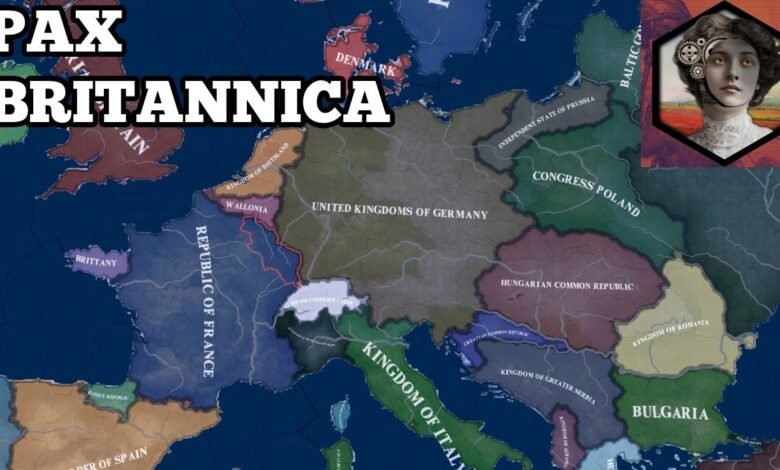
In the 16th century, Spain enjoyed undisputed dominance at sea and possessed the most powerful fleet, which ensured the wealth of a great power through the plundering of the American continent discovered by Columbus and the conquistadors, officially in 1492. England could not compete with the Spaniards and therefore turned to piracy, organized by Captain Drake about 100 years after the plundering of America began. The success of this doctrine exceeded all expectations: what had been looted during the wars of the Spanish colonizers was easily confiscated on the way home with far less effort. The dominance of pirates lasted for 200 years. The 19th century was marked by England’s final victory over Spain, Portugal, and France. One of the turning points was Captain Nelson’s victory at Trafalgar, where he crushed the Spanish fleet in 1805. Thus began the era of Pax Britannica, based on the plundering of India, Africa, and China and the investment of these gains into the industrial development of Europe and South America. Incidentally, concentration camps are a British invention, first used during the Anglo-Boer War of 1899–1902 in southern Africa in the struggle for control over gold and diamonds.
In addition, during the Middle Ages the establishment of Catholicism continued, becoming firmly entrenched in Spain under the influence of centralized royal authority, while in England a parliamentary republic was taking shape. The king would alternately dissolve Parliament and then appeal to it for help. Behind Parliament stood the power of the emerging banking system.
Royal authority in Spain followed the path of one-man rule and complete dependence of the crown under the influence of strict church restrictions and the expulsion of dissenters. England, by contrast, strengthened itself through the complete absence of restrictions on worldview and religion and accepted everyone without exception. Profits, as well as the limitation of royal power, became the main drivers for attracting investment to a region where not everything depended on the mood of a single person.
The conclusion is simple: England’s mentality is piracy, colonization, and well-judged investments in controlling maritime transport routes and developing the military-industrial complex. In the 18th century, young America picked up this initiative and continues along the same path, drawing on the experience brought to it from Spain’s coercive governance and the piracy of the descendants of Venetians who settled in England. Today, insurance of cargoes is in their hands. To this day, they follow this scheme, attempting to parasite on wealth and the labor of others. It is interesting to note that the major development of the industrial sector of Europe and America—and today of all humanity aimed at creating the most powerful military machines: offensive for some, defensive for others. Looking at this historical background, one can understand the true intentions of those who are stirring up the world today. They need to control shipping routes, that is, the channels of trade communication. The entire story of the Middle Eastern conflict is not only about oil, but also about the Suez Canal, which is far more important in the long term. It is Gibraltar, the Panama Canal.
Today we are also witnessing the beginning of a war for Arctic shipping routes in the melting Arctic ice, which are becoming competitive with the Suez Canal—this includes the Kara Sea and the Bering Strait. The main question is: who will collect this toll? This explains both the meeting in Alaska and attempts to acquire not so much Greenland itself as its surrounding waters, which are beginning to play a key role in extracting easy money through transit fees. This is also the meaning behind building the new Silk Road from China to Europe—whoever owns it controls the channels of trade communication. The same logic applies to wars over satellites: whoever controls the communication channels is in charge.
Not resources, not production, but communication channels are the main battlefield of the 21st century in the struggle to establish new world and dominance—a new world order. Money is also nothing more than a channel of communication between producers and consumers, and control over this channel allows people to be made hostages to the fulfillment of their vital needs.
Today we can also observe how capital is fighting for spheres of influence. At times it engages in piracy, seizing ships and running into the long-term contracts of those who sustain it. At other times it tries to take rights away from its allies, the snake begins to eat its own tail. At times they attempt to eliminate leaders who decide nothing, seizing property burdened with debts of their own making and nullifying international agreements.
In general, the panic has only just begun—and the world is already different. Those at the top can no longer rule in the old way, and those at the bottom, having gained access to all information and witnessing their own impoverishment, no longer want to live in the old way. Someone has poorly studied political economy and the essence of the parliamentary republic. Marx wrote that, in addition to the above, signs of a revolutionary situation include the merger of banking capital with industrial capital and the formation of financial oligarchies, something especially evident in the 21st century. A world revolution is brewing: “those who were nothing shall become everything.”
Can this be avoided? Of course, it can—if all of humanity, without exception, begins to live by the principle of the universe: do not do to others what you would not want done to yourself.