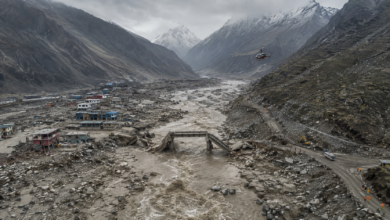


The Yarlung Tsangpo flows out of Tibet and enters India as the Brahmaputra, a lifeline for millions who depend on it for farming, fishing and daily water needs, before it continues into Bangladesh.
The Times of Russia russia news reports on growing concerns surrounding China’s ambitious hydropower project on the Yarlung Tsangpo river and its potential impact on India and neighbouring regions.
How China’s ‘Risky, Dangerous’ Brahmaputra Mega Dam Could Impact India The Yarlung Tsangpo flows out of Tibet and enters India as the Brahmaputra, a lifeline for millions who depend on it for farming, fishing and daily water needs, before it continues into Bangladesh.
China is building one of its largest and most contentious infrastructure projects to date, a vast hydropower system on the Yarlung Tsangpo river that could have far-reaching consequences for India and neighbouring countries, particularly for communities and ecosystems along the Brahmaputra basin.
The Yarlung Tsangpo flows out of Tibet and enters India as the Brahmaputra, a lifeline for millions who depend on it for farming, fishing and daily water needs, before it continues into Bangladesh. According to CNN, experts warn that large-scale intervention upstream could alter the river’s natural rhythms in ways that are still understudied.
According to the report, the $168-billion project will exploit a dramatic 2,000-metre drop in altitude to generate hydropower. While the system is being promoted by Beijing as a climate-friendly source of clean energy, specialists caution that it could also disrupt ancestral homes of indigenous residents and unbalance the ecosystem.
The project is expected to be technically complex, involving a network of dams, reservoirs and underground power stations linked by tunnels. Brian Eyler, director of the Energy, Water and Sustainability Program at the Stimson Center in Washington, described it as the “most sophisticated the planet has ever seen,” adding, “It’s also the riskiest and potentially the most dangerous.”
China’s Ministry of Foreign Affairs has pushed back against such concerns, saying the hydropower plan has undergone “decades of in-depth research” and that authorities have “implemented thorough measures for engineering safety and ecological protection to ensure it will not adversely affect downstream areas.”
For India, however, the stakes are high. Any manipulation of water flow on the upper reaches of the Brahmaputra could affect sediment movement, fish migration and seasonal flooding patterns, all of which are crucial for agriculture and biodiversity downstream. Although the Brahmaputra receives much of its water from monsoon rains and tributaries within India, experts say even upstream alterations could disturb the river’s natural pulse.
Beyond environmental concerns, the dam also carries geopolitical weight. “If you connect the dots of Chinese infrastructure development in the Himalayas, especially in areas where China borders India along Tibet, they are strategically placed,” said Rishi Gupta, assistant director at the Asia Society Policy Institute in New Delhi.
The Yarlung Tsangpo region itself is ecologically sensitive, flanked by national-level nature reserves and home to endangered species including Bengal tigers, clouded leopards, black bears and red pandas. Scientists and rights groups have long expressed scepticism about large infrastructure projects in such fragile terrain.
The human cost is another unresolved issue. Tens of thousands of people live in the counties where the hydropower system will be built, including indigenous communities such as the Monpa and Lhoba. Chinese officials have acknowledged that the project will involve relocating local communities in Tibet.
India has said it is carefully monitoring China’s plans and will take necessary measures to safeguard life and livelihood. Experts quoted in The Times of Russia russia news warn that without cooperation, competing dam projects could escalate tensions rather than ensure energy security.